
“Topographical amnesia is a disorder of fifinding one’s way around familiar environments and in learning to navigate new ones.”
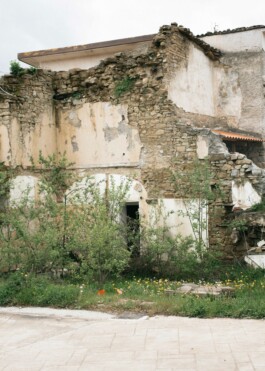
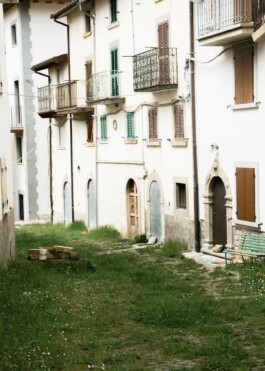
Central Italy, August 24, 2016, 3:36 a.m., an earthquake shatters the land and the lives of Amatrice (RI), together with its 69 hamlets. What existed before no longer exists now, and will never exist again, but in the fragile memories of those who left, those who stayed, and those who returned. Disasters carry a particular form of fracture in time, dividing it into what was before and what is after. A rupture that humans end up, perhaps unwittingly, feeding by razing the salvageable and sacralizing the memory of an oblivion.
Amatrice
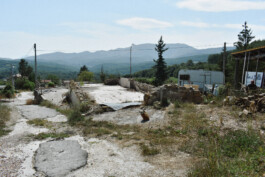
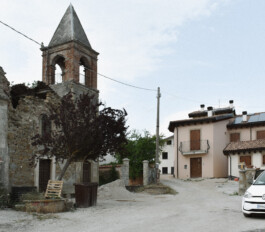
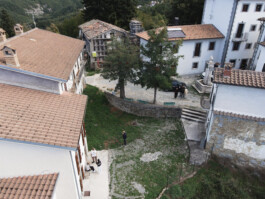
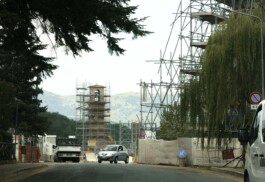
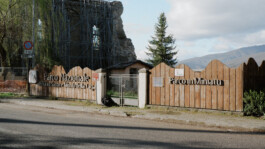
Today, Amatrice is a collection of construction sites, bulldozers, large noisy trucks, gates, metal fences, wooden walls —who are they keeping out? What are they hiding?— houses without windows or doors, painted in unusual shades of green and yellow; a neglected church, 13 bells keep safe in an inaccessible garden, and the bar, Bar Rinascimento. This name sounds familiar and dear to us, because every Italian city, town, and village has one. In Amatrice, the streets had equally well-known names: Garibaldi, S. Francesco; Via devi Bastioni, Via Roma, Via della Madonnella, Via Teatro Vecchio. For ten years now, these streets no longer exist, and the city consists of a single road: Corso Umberto I. There are not many people on that street, only a few walk, and many cars are driving.
After all, most of the remaining inhabitants are very old, but thanks to them, we learn stories and anecdotes, we learn how to deal with these surroundings, what words to use, and what questions to avoid. Some of us remember Amatrice, a destination for yearly family vacations, but for others, it is more difficult to imagine its image of the past. In fact, for many of us, Amatrice is what we see in the present: an empty stretch of land. As it must be for many children and young people born shortly before or shortly after 2016. Their daily lives take shape between the SAE, the two shopping centers, and the school. What should they do with the memory of a past that no longer exists? What they see daily is the only reality that exists. They do not know the promises and illusions of the “temporary.”

The caretaker Arianna:
“Our little kids have never seen old Amatrice. If they never develop aconnection to the territory, will they ever remember to come back when they grow old?”
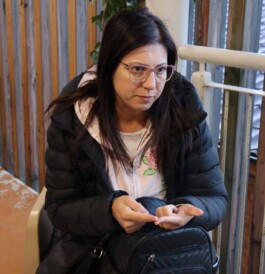
Arianna is part of the local association “Alba dei Piccoli Passi”, which focuses on supporting pupils with recreational and educational activities. She offers them a space to learn and supports parents that can’t take care of their children while at work. She imagines that the Garden of Miniatures, located right in front of the old historical centre, could become a newly accessible playground, but “no longer a traditional one”. There, various activities carried out from the association could take place.
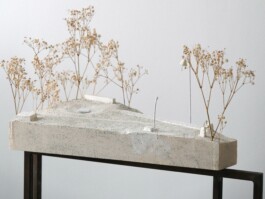
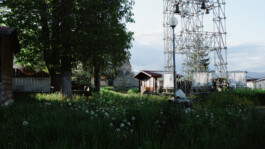
The garden site contains some small ruins, a temporary bell tower, a miniature of the local mountains, Monti della Laga. There is also a wooden cabin, which, as she mentions, may be useful to store materials for the association activities. Grass has overgrown from exhisting garden beds, partly covering paved areas. In summers, “kids have no shaded places to play”, she adds, “that garden, differently than others, is covered by big trees”. If reopened, kids could safely play, reconnect with the historical centre. Old inhabitants and granparents could sit close by, telling stories about what everything used to look like.
Lago Scandarello
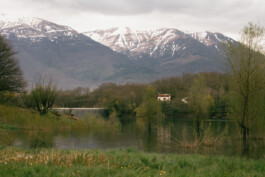
Sometimes it narrows, other times it expands. With its sinuous yet tense shapes, the Scandarello lake breathes. The large artificial dam is responsible for it. Like the image of a chest inhaling and exhaling, so does the water lower and rise: submerging trees, erasing roads and paths; in return, it gives back small islands, at times accessible and at other times impossible to reach. This breathing, this soul, was visible when, in February, we saw a pattern of dense horizontal lines imprinted on the earth. The shores of this lake are in constant motion, a state of uncertainty for those who visit and experience them. This uncertainty, which is part of its beauty, mixes with a sense of neglect and abandonment that has little to do with the consequences and dynamics triggered by the earthquake.
Here, the origins are to be found elsewhere: in the general lack of maintenance of natural areas, which end up becoming overgrown (the paths disappear and there are no signs to guide you), together with the depopulation of the Inner Areas of Italy, and, perhaps, with the disappearance of simple habits, such as spending a day outdoors. We get lost several times, moving forward and then turning back, relying on a vague sense of orientation, with the only certainty of the water always behind us. Along the road, we meet no one.

The caretaker Daniele:
“I would like everyone to experience the beauty of this place”
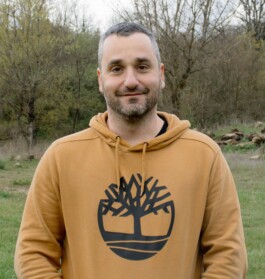
Daniele is a member of the association “Lenza Club”. The association manages 9 fishing spots distributed along the lake shores, as the Lake is a renowned spot for sport fishing in the territory. Daniele has abundant knowledge of fishing and knows the shores by heart. As he says, “only fishermen come here to enjoy the lake, which is a pity, the lake is a beautiful escape”.
He believes in the possibilities of Lake Scandarello beyond fishing, as it could become an attraction for locals and tourists. “The lake is well equipped for fisherman already, and in general, they don’t need much. They bring everything on their cars: tents to cover from rain, chairs, food, folding tables. When they leave, the shores become empty and silent”. Wondering how new users could inhabit that place, he smiles at the lake one more time. Then he returns to his farm, where his family is waiting for him.
Eremo della Croce
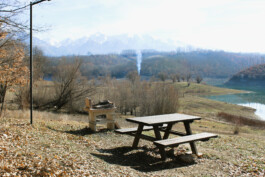
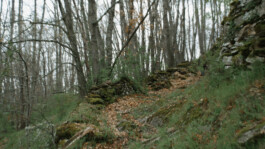
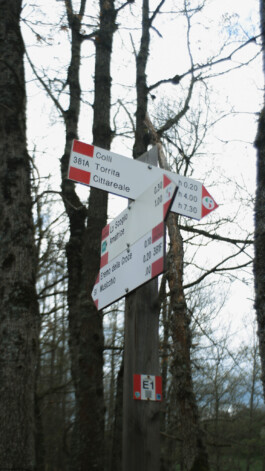
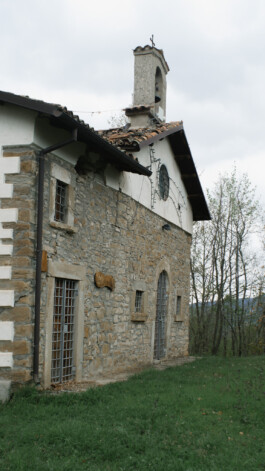
L’Eremo della Croce (the Hermitage at the Cross) is a peculiar place to be alone. A long, winding, and steep trail precedes it for about two kilometres, following the lead of dry stone walls pointing the way. Unravelling between fields and woods, the path reveals many kinds of encounters from both natural and anthropic worlds: plants, animals, mosses, and mushrooms dwell undisturbed, accompanied by signs and symbols that ease orientation.
The journey is one of quiet anticipation; it is an opportunity to lower the volume of one’s presence and tune in with the surroundings. The hermitage is perched right in front of Amatrice, offering a gaze that is an almost abstracted depiction of the town: far enough to see it in its entirety, yet close enough to appreciate its details.

The caretaker Paolo:
“We want to be loud and visible from every corner in Amatrice.”
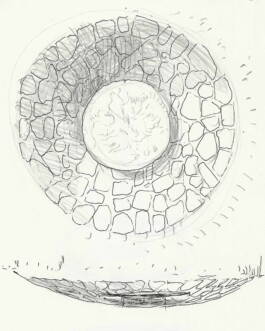
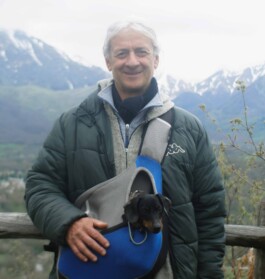
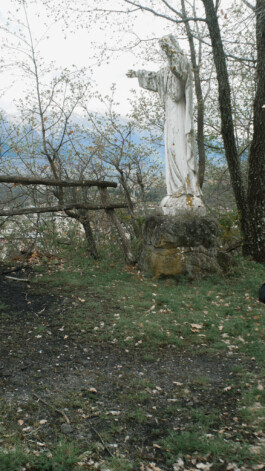
Every year the traditional “Procession of Santa Maria della Croce” takes place. Paolo carefully describes the steps in the procession: the statue of Mary carried up to the hermitage, the collective mass marked by the loud sounds of a big bell, the fire flickering as people gather to cook, share food, and tell stories. In the past, a big brazier was located at the centre of the space, lots of wood was added so that its smokes could be proudly seen in the whole valley, and when the bell was ringing, “it was impossible not to hear us”. All these traditions took place on a small grassy ledge between the church and the edge of the mountain, looking out toward Amatrice. Today, the celebration is simplified as most of these objects and tools are unavailable or damaged: the bell cannot ring anymore, the brazier is not longer there, and the inhabitants only celebrate with fireworks. Paolo, holding Gastone (his beloved dog) sadly acknowledges: “Celebrations are not memorable as before”.
Fiume Molinaro
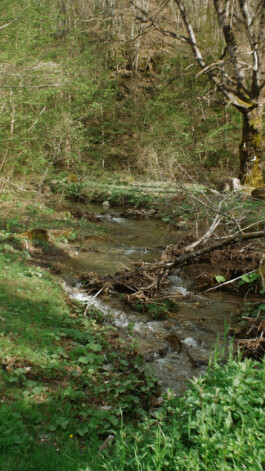
“Nature is the only survivor of the earthquake”. Meandering through the roads and landscapes of Amatrice, this daring sentence proves true and touches our hearts. Among the shreds of houses, the landscape stands still, carrying forward its natural course, undisturbed. Our exploration has been blessed with the encounter of many locals. Some of them revealed a deep awareness of the possibilities that Amatrice’s natural world conceals, and among loud voices of despair, nostalgia, and helplessness, these voices of hope emerged quietly, revealing their modest yet powerful dreams. Waist-deep in their daily missions, they gave the impression that the earthquake was just an exceptional background to a quite regular daily life. When we met Monica in Voceto, despite the all too familiar houses in ruin, or the church fallen into large chunks held together by steel structures, we experienced an unusual feeling of normality.
An aura of peace and hope surrounded us. Monica let us in. With her distinctive care for details and passion for stories, she described to us what she found in the landscape she calls home: bees. She defines them as “tireless constructors, exemplary for their attitude towards collaboration and care” and believes we can learn a lot from them, about kinship, about hard work, about resilience. “Every drop of honey we pick is a little gesture celebrating natural power: able to reconstruct and give life.” In visiting her apiary – its distinctive trait being its unique location at 1000m above the sea level – and learning what led her to move her first steps, and what keeps her busy still today, five years later, we started believing in her dreams too. We found the hope we had been looking for.

Caretakers Monica and her daughter:
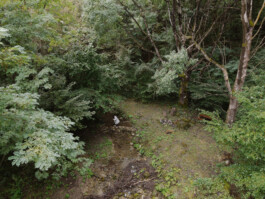
“The river is a rich and lively ecosystem. My bees live out of its resources. I wish people could get to know these wonderful processes”
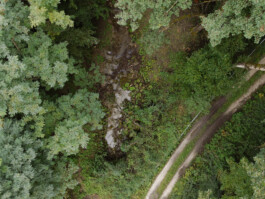
Today, Monica no longer thinks of the river as a point of arrival, but rather as a point of departure, a beginning to explore the natural landscape in depth. She describes round tables, moments of dialogue, and didactic experiences to recount the biodiversity and natural heritage that characterise this ecosystem. She dreams about stops along the way, following the choreographies of her bees: retracing the routes of local biodiversity.
She dreams of giving back an authentic fragment of the history of this community, but also of creating new ones.
In her words, “In this context, the apiary is not only a place to work, it is a bridge between history, local culture, and the environment that surrounds us. It is the profound connection between humans and earth, between our past and our future, between the necessity of renewal and the rediscovery of what really matters.”
Capricchia
Every time we come back, Capricchia adds another piece to its story. Positioned between the sky and the mountains, watched over by the silence of the woods, the road to get there always goes uphill. The car wheels slip over the gravel: a too-familiar sound that blends with unexpected voices of children. Though rare, they are easy to get used to immediately. We take a breath of air: summer. So many hues and shades of green; so many yellows, purples, and whites from the flower fields. So much beauty is difficult to accept: it clashes with the image of gutted houses, piles of rubble, disconnected roads, and the hopeless words of those inhabiting the village. Yet, we do sense and witness hope every time we come to visit.
It is disguised in all the cats roaming undisturbed between the ruins. In a long piece of stone improvised as a step to climb a wall too high for an elderly body. It is disguised in the youths and their music, whenever they come back; in them believing in the emancipatory value that these places hold because of their distance from urbanity, and the vulnerability that threatens them because that very urbanity is approaching. It is disguised in the chairs left outside the front doors: witnesses to nighttime conversations, witnesses to life. And once more, it is disguised in the rich, blooming gardens that hide away the yellow walls of the SAE. Such care and elegance strike us.
How can we recount to them what we see?

The caretakers Livia and Simone:
“We live in Rome but we love to gather here in summer and during the weekends. This is our safe space to party undisturbed, but bad weather often ruins our bonfifires and romantic moments.”
Meeting Livia and Simone felt like discovering a rare treasure in Amatrice. They were the first young faces we had seen in a while, and their deep devotion to the land of their grandparents radiated from every word and gesture. Their commitment is not just strong; it is inspiring. Even more astonishing is the vibrant circle of young people who share their mission to keep Capricchia thriving, and who come back nearly every weekend. For them, what might seem like hard work is simply a joyful return, inherently and willingly part of their daily life.
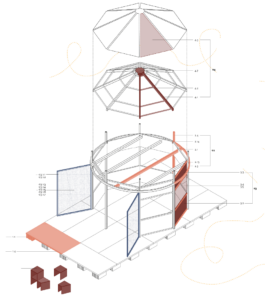
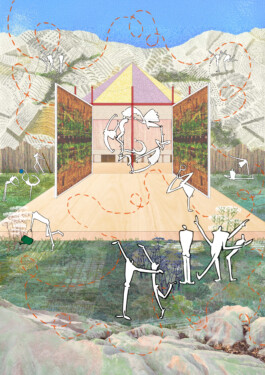
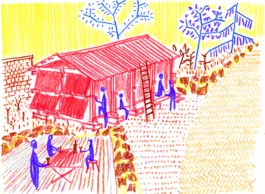
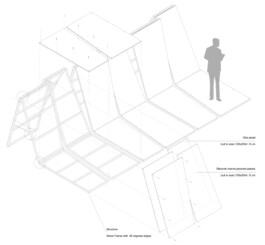
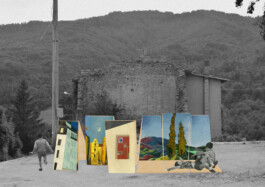
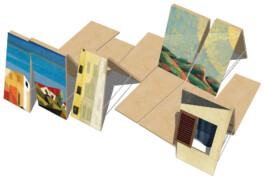
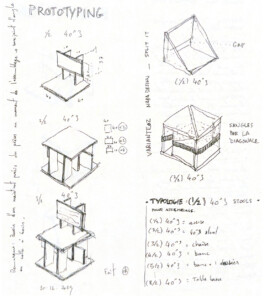
Every summer they go up to the fields and build a “shaky shelter” in order to have shade and organise parties, play music, dance. That’s “their spot”, but also an unsure one, because they have to remove it at the end of the season. As they say “it could be nice to have a more permanent shelter, it would make our parties safer and more memorable”. Furthermore, as they reflect, that could become a reason for other inhabitants to come up more often. What is sure is that their spot in the fields holds a special magic, and we feel both enchanted and privileged to play a part in their story. We are grateful for their trust, and they are “excited to introduce you to their community”.

Casale
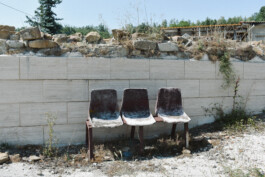
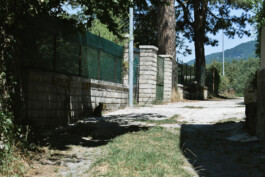
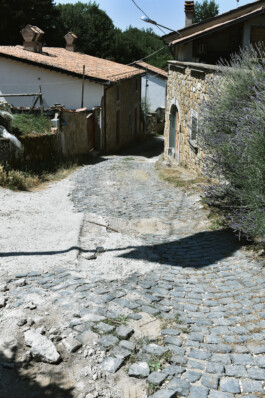
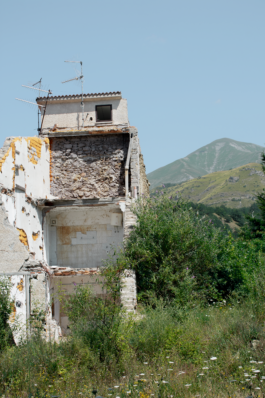
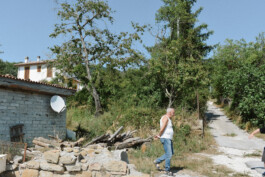
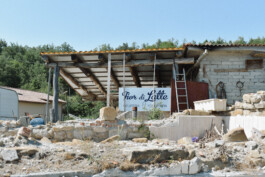
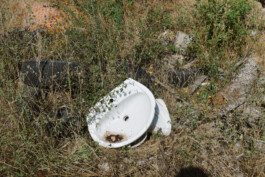
Talking about Casale can be complicated; the gaze drifts and returns repeatedly to identical features and details, the same aura of neglect and of abandonment. And so do our words. Today’s relentless heat worsens things. Casale is parched, and the fir forest stand provides relief neither to us nor to the hamlet. The typical tree canopy is depleted: slim and upright, the branches nearly brush the earth. The inhabitants of this place must have suffered greatly. Lacking the words to describe this tiny hamlet in need of complete restoration, we engage with the attempt to catalog and give names to what appears, without any apparent order. Here is what you can encounter in Casale: Stacked wood. Scattered pieces of logs. Piles of bricks, some broken, some red, some gray. Rectangular stones and round stones gather nearby. Scaffolds are red and in different colors. A broken sink appears next to pieces of black plastic—soft and hard, all from the same origin. Snake skins, not just one but two, rest in the chaos. There’s a big, really hairy dog; no cats to be seen. Electric poles—one, two, three—stand in a row, and that’s it. A gray container with a window sits beside a shabby trailer.
Two houses in good condition, both white with closed shutters, look untouched. Two coat racks. A sign for an ice cream shop hangs. No ice cream. Two streetlights, uncultivated lawns, wildflowers. Grass: short, tall, trampled, always untamed. Five abandoned tires. Plastic flower pots, and some without flowers. A green tool shed, a green fence. Two television antennas. A piece of gray sheet metal from a roof. A temporary wooden house, wooden stairs, a wooden chair. Different types of paving meet—gravel, pieces of black and gray asphalt. There’s a church that is no longer a church. A floor with large white squares. The mountains beyond. The sky. A few shapeless clouds. Silence prevails. Among these things is a row of three plastic chairs balancing precariously, resembling those at a bus stop. As we stare at them for too long, a man approaches. Lost in our game, we ask him, “Excuse me, do you know when the next one will pass?” Who knows, maybe Casale has always been like this—like what?—a group of a few rural houses in the open countryside with no walls to defend it.


The caretaker Roberto:
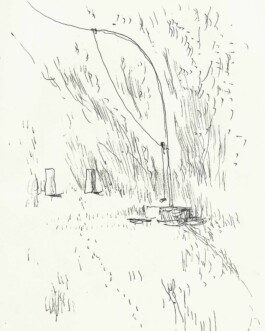
“When old inhabitants come back they can’t even find a covered space to do the simplest things; eat a sandwich, go to the restroom, wait for the rain to pass.”
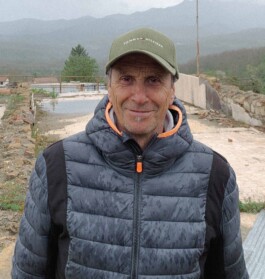
Roberto is the kind of person who can fix almost anything, a true handyman with a knack for finding solutions. And very practically, he shares his worries about friends and neighbours that no longer live here in Amatrice, hoping we might have some answers. He tells us that Casale is full of second homes, many now under reconstruction, making it nearly impossible for people to find shelter after long journeys from Rome.
He points out that Amatrice spends most of the year shrouded in cold, rain, and snow, hardly a warm welcome for visitors without a place to stay. The simplicity of his dilemma touches us: it seems like, for once, he is handing out the challenge to someone else.

Collegentilesco
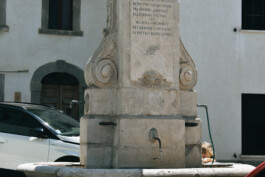
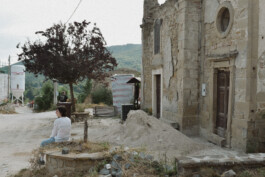
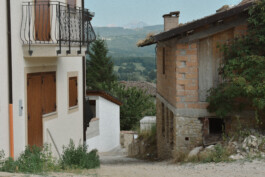
Like on an elementary journey from A to B, anyone confident enough to wrestle with steep and dirty roads will be able to find their way to Collegentilesco and conclude their journey at the central square, driven by a sort of gravitational force, or, more likely, by the inevitability of a one-road journey. Dense vegetation conceals the village from the outside, while a row of houses perched on the edge of the hilltop shields the square at the heart of the village. It would indeed be surprising to find Collegentilesco without a reason to look for it. The village is not particularly exceptional. It abides by the rules of what a place left in ruin is supposed to look like: a house severed in half, a quiet fountain, a collapsed church, and an air of silence dominate the central square of Collegentilesco, just as they would do in any other desolate location. So ordinary is it that one might struggle to notice the handful of houses already rebuilt.
Shutters drawn, lifeless rooms, they look no more alive than their neighboring ruins. In being forgotten, they have died a second time. The four families still living in Collegentilesco drifted away to opposite corners of the village, guarding its entrances at the four cardinal directions, as if this place had become more of a ruin to tacitly protect from four lonely forts rather than a place to hold onto together. Everyone has turned their back on the square. It is no longer the place where “someone from their doorstep would ask, ‘do you want coffee?’” but rather, it has become the periphery of individual lives. And yet, anyone on a journey from A to B, naturally arriving at the square after traversing steep and dirty roads, cannot help but feel welcomed on top of a beautiful stage overlooking the landscape. How nice it would be to savour that view with lifelong companions again.

The caretaker Gianni:
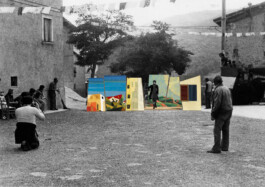
“There was a stage here once. I used to perform with the accordion when we had our countryside festivals. Then we made doughnuts and cooked good food.”
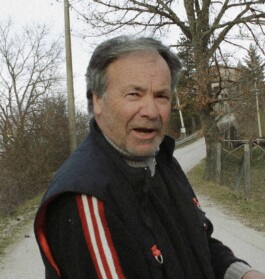
We met Gianni by chance. He came towards us with a big smile. Without us asking, he started to tell stories of his village, Collegentilesco. He used to play the accordion, and exactly in front of us, in an empty void, there was a stage where he performed. Remembering those times filled him with joy. He is now a member of the association “Amatrice a Cavallo”, where he finds spaces of conviviality.
His enthusiasm led him to trust us and gift us with lots of stories and recollections. He even showed us the old stage they used to set up during festivals. It is stored inside a fallen shed, and he is not really sure if all the pieces are still there. Houses in Collegentilesco are starting to be rebuilt, so he hopes his family will come back one day.
Cornillo Nuovo
Cornillo Nuovo is enchanting. In the inevitable attempt to take over what is left behind by humans, nature dwells comfortably in its streets. Through the alleys, taken over by the natural landscape, a green carpet-like surface infiltrates the town and blurs the boundaries between what is urban and what is natural. Remnants of the past intertwine with grass and flowers, reminding us humans that Amatrice’s destruction has been, after all, the product of the careless and inevitable action of nature. The buildings stand still as empty ruins: monuments of the past awaiting demolition and a better, more sound, reconstruction, that will survive the next quakes.
Unlike in other villages, these buildings don’t demand attention or compassion, because the heart of this village, the square, is bizarrely still beating. Almost intact, accessible, and welcoming, as if it were awaiting for someone to inhabit it, the square offers a place to sit, something we have learnt cannot be taken for granted here. This brief opportunity takes away all the pain and concern for the future reconstruction. Cornillo offers a chance to rest and sit, but perhaps it is still in search of a reason to stay.


The caretaker Antonella
“We’d like to meet again in the central streets, where old people get some rest and the children play together.”
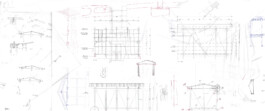
As part of the association “La Concordia”, but also as an architect, Antonella shares her dreams for Cornillo Nuovo. Pointing out at the stones left around the streets, she suggests that it would be delightful to engage with them in some ways, and experiment with different kinds of constructions. “Some people here have experience with stone work, like Peter, who lives at the end of the village.” Stones are part of Amatrice’s heritage, with sandstone “Pietra Serena” being the local and most used material. Because new constructions need to be seismically safe, salvaged stones are often dismissed due to their structural flaws.
She continues describing Cornilo Nuovo as a close-knit community, explaining that the public streets and squares still represent relevant spaces for them. Unlike in many other hamlets, here it is possible to sit and spend time in the central square. It is a rare possibility, since the streets of other hamlets are often fenced off and made inaccessible until completion of reconstruction works. “It would be really nice to revive our centre and add new meaning, a new purpose to it. People would definitely benefit from a pleasant place for gathering. It might contribute to the wellbeing of this community, and it might bring peace to animosities and fights.”


“Topographical amnesia is a disorder of fifinding one’s way around familiar environments and in learning to navigate new ones.”
Central Italy, August 24, 2016, 3:36 a.m., an earthquake shatters the land and the lives of Amatrice (RI), together with its 69 hamlets. What existed before no longer exists now, and will never exist again, but in the fragile memories of those who left, those who stayed, and those who returned. Disasters carry a particular form of fracture in time, dividing it into what was before and what is after. A rupture that humans end up, perhaps unwittingly, feeding by razing the salvageable and sacralizing the memory of an oblivion.
Amatrice
Today, Amatrice is a collection of construction sites, bulldozers, large noisy trucks, gates, metal fences, wooden walls —who are they keeping out? What are they hiding?— houses without windows or doors, painted in unusual shades of green and yellow; a neglected church, 13 bells keep safe in an inaccessible garden, and the bar, Bar Rinascimento. This name sounds familiar and dear to us, because every Italian city, town, and village has one. In Amatrice, the streets had equally well-known names: Garibaldi, S. Francesco; Via devi Bastioni, Via Roma, Via della Madonnella, Via Teatro Vecchio. For ten years now, these streets no longer exist, and the city consists of a single road: Corso Umberto I. There are not many people on that street, only a few walk, and many cars are driving.
After all, most of the remaining inhabitants are very old, but thanks to them, we learn stories and anecdotes, we learn how to deal with these surroundings, what words to use, and what questions to avoid. Some of us remember Amatrice, a destination for yearly family vacations, but for others, it is more difficult to imagine its image of the past. In fact, for many of us, Amatrice is what we see in the present: an empty stretch of land. As it must be for many children and young people born shortly before or shortly after 2016. Their daily lives take shape between the SAE, the two shopping centers, and the school. What should they do with the memory of a past that no longer exists? What they see daily is the only reality that exists. They do not know the promises and illusions of the “temporary.”

The caretaker Arianna:
“Our little kids have never seen old Amatrice. If they never develop aconnection to the territory, will they ever remember to come back when they grow old?”

Arianna is part of the local association “Alba dei Piccoli Passi”, which focuses on supporting pupils with recreational and educational activities. She offers them a space to learn and supports parents that can’t take care of their children while at work. She imagines that the Garden of Miniatures, located right in front of the old historical centre, could become a newly accessible playground, but “no longer a traditional one”. There, various activities carried out from the association could take place.
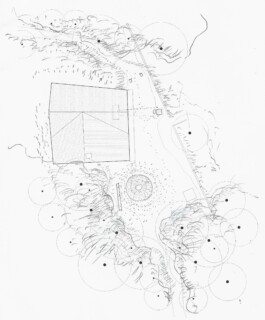
The garden site contains some small ruins, a temporary bell tower, a miniature of the local mountains, Monti della Laga. There is also a wooden cabin, which, as she mentions, may be useful to store materials for the association activities. Grass has overgrown from exhisting garden beds, partly covering paved areas. In summers, “kids have no shaded places to play”, she adds, “that garden, differently than others, is covered by big trees”. If reopened, kids could safely play, reconnect with the historical centre. Old inhabitants and granparents could sit close by, telling stories about what everything used to look like.


Lago Scandarello
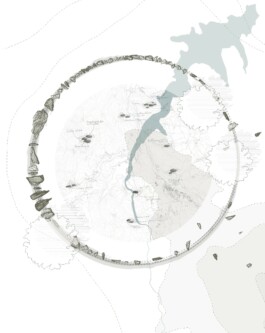
Sometimes it narrows, other times it expands. With its sinuous yet tense shapes, the Scandarello lake breathes. The large artificial dam is responsible for it. Like the image of a chest inhaling and exhaling, so does the water lower and rise: submerging trees, erasing roads and paths; in return, it gives back small islands, at times accessible and at other times impossible to reach. This breathing, this soul, was visible when, in February, we saw a pattern of dense horizontal lines imprinted on the earth. The shores of this lake are in constant motion, a state of uncertainty for those who visit and experience them. This uncertainty, which is part of its beauty, mixes with a sense of neglect and abandonment that has little to do with the consequences and dynamics triggered by the earthquake.
Here, the origins are to be found elsewhere: in the general lack of maintenance of natural areas, which end up becoming overgrown (the paths disappear and there are no signs to guide you), together with the depopulation of the Inner Areas of Italy, and, perhaps, with the disappearance of simple habits, such as spending a day outdoors. We get lost several times, moving forward and then turning back, relying on a vague sense of orientation, with the only certainty of the water always behind us. Along the road, we meet no one.

The caretaker Daniele:
“I would like everyone to experience the beauty of this place”

Daniele is a member of the association “Lenza Club”. The association manages 9 fishing spots distributed along the lake shores, as the Lake is a renowned spot for sport fishing in the territory. Daniele has abundant knowledge of fishing and knows the shores by heart. As he says, “only fishermen come here to enjoy the lake, which is a pity, the lake is a beautiful escape”.
He believes in the possibilities of Lake Scandarello beyond fishing, as it could become an attraction for locals and tourists. “The lake is well equipped for fisherman already, and in general, they don’t need much. They bring everything on their cars: tents to cover from rain, chairs, food, folding tables. When they leave, the shores become empty and silent”. Wondering how new users could inhabit that place, he smiles at the lake one more time. Then he returns to his farm, where his family is waiting for him.

Eremo della Croce
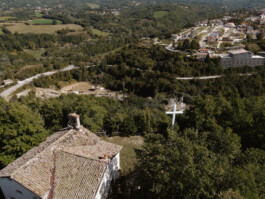
L’Eremo della Croce (the Hermitage at the Cross) is a peculiar place to be alone. A long, winding, and steep trail precedes it for about two kilometres, following the lead of dry stone walls pointing the way. Unravelling between fields and woods, the path reveals many kinds of encounters from both natural and anthropic worlds: plants, animals, mosses, and mushrooms dwell undisturbed, accompanied by signs and symbols that ease orientation.
The journey is one of quiet anticipation; it is an opportunity to lower the volume of one’s presence and tune in with the surroundings. The hermitage is perched right in front of Amatrice, offering a gaze that is an almost abstracted depiction of the town: far enough to see it in its entirety, yet close enough to appreciate its details.

The caretaker Paolo:
“We want to be loud and visible from every corner in Amatrice.”

Every year the traditional “Procession of Santa Maria della Croce” takes place. Paolo carefully describes the steps in the procession: the statue of Mary carried up to the hermitage, the collective mass marked by the loud sounds of a big bell, the fire flickering as people gather to cook, share food, and tell stories. In the past, a big brazier was located at the centre of the space, lots of wood was added so that its smokes could be proudly seen in the whole valley, and when the bell was ringing, “it was impossible not to hear us”.
All these traditions took place on a small grassy ledge between the church and the edge of the mountain, looking out toward Amatrice. Today, the celebration is simplified as most of these objects and tools are unavailable or damaged: the bell cannot ring anymore, the brazier is not longer there, and the inhabitants only celebrate with fireworks. Paolo, holding Gastone (his beloved dog) sadly acknowledges: “Celebrations are not memorable as before”.


Fiume Molinaro
“Nature is the only survivor of the earthquake”. Meandering through the roads and landscapes of Amatrice, this daring sentence proves true and touches our hearts. Among the shreds of houses, the landscape stands still, carrying forward its natural course, undisturbed. Our exploration has been blessed with the encounter of many locals. Some of them revealed a deep awareness of the possibilities that Amatrice’s natural world conceals, and among loud voices of despair, nostalgia, and helplessness, these voices of hope emerged quietly, revealing their modest yet powerful dreams. Waist-deep in their daily missions, they gave the impression that the earthquake was just an exceptional background to a quite regular daily life. When we met Monica in Voceto, despite the all too familiar houses in ruin, or the church fallen into large chunks held together by steel structures, we experienced an unusual feeling of normality.
An aura of peace and hope surrounded us. Monica let us in. With her distinctive care for details and passion for stories, she described to us what she found in the landscape she calls home: bees. She defines them as “tireless constructors, exemplary for their attitude towards collaboration and care” and believes we can learn a lot from them, about kinship, about hard work, about resilience. “Every drop of honey we pick is a little gesture celebrating natural power: able to reconstruct and give life.” In visiting her apiary – its distinctive trait being its unique location at 1000m above the sea level – and learning what led her to move her first steps, and what keeps her busy still today, five years later, we started believing in her dreams too. We found the hope we had been looking for.

Caretakers Monica and her daughter:
“The river is a rich and lively ecosystem. My bees live out of its resources. I wish people could get to know these wonderful processes”

Today, Monica no longer thinks of the river as a point of arrival, but rather as a point of departure, a beginning to explore the natural landscape in depth. She describes round tables, moments of dialogue, and didactic experiences to recount the biodiversity and natural heritage that characterise this ecosystem. She dreams about stops along the way, following the choreographies of her bees: retracing the routes of local biodiversity.
She dreams of giving back an authentic fragment of the history of this community, but also of creating new ones.
In her words, “In this context, the apiary is not only a place to work, it is a bridge between history, local culture, and the environment that surrounds us. It is the profound connection between humans and earth, between our past and our future, between the necessity of renewal and the rediscovery of what really matters.”


Capricchia
Every time we come back, Capricchia adds another piece to its story. Positioned between the sky and the mountains, watched over by the silence of the woods, the road to get there always goes uphill. The car wheels slip over the gravel: a too-familiar sound that blends with unexpected voices of children. Though rare, they are easy to get used to immediately. We take a breath of air: summer. So many hues and shades of green; so many yellows, purples, and whites from the flower fields. So much beauty is difficult to accept: it clashes with the image of gutted houses, piles of rubble, disconnected roads, and the hopeless words of those inhabiting the village. Yet, we do sense and witness hope every time we come to visit.
It is disguised in all the cats roaming undisturbed between the ruins. In a long piece of stone improvised as a step to climb a wall too high for an elderly body. It is disguised in the youths and their music, whenever they come back; in them believing in the emancipatory value that these places hold because of their distance from urbanity, and the vulnerability that threatens them because that very urbanity is approaching. It is disguised in the chairs left outside the front doors: witnesses to nighttime conversations, witnesses to life. And once more, it is disguised in the rich, blooming gardens that hide away the yellow walls of the SAE. Such care and elegance strike us.
How can we recount to them what we see?

The caretakers Livia and Simone:
“We live in Rome but we love to gather here in summer and during the weekends. This is our safe space to party undisturbed, but bad weather often ruins our bonfifires and romantic moments.”

Meeting Livia and Simone felt like discovering a rare treasure in Amatrice. They were the first young faces we had seen in a while, and their deep devotion to the land of their grandparents radiated from every word and gesture. Their commitment is not just strong; it is inspiring. Even more astonishing is the vibrant circle of young people who share their mission to keep Capricchia thriving, and who come back nearly every weekend. For them, what might seem like hard work is simply a joyful return, inherently and willingly part of their daily life.
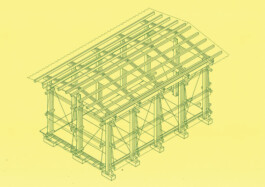
Every summer they go up to the fields and build a “shaky shelter” in order to have shade and organise parties, play music, dance. That’s “their spot”, but also an unsure one, because they have to remove it at the end of the season. As they say “it could be nice to have a more permanent shelter, it would make our parties safer and more memorable”. Furthermore, as they reflect, that could become a reason for other inhabitants to come up more often. What is sure is that their spot in the fields holds a special magic, and we feel both enchanted and privileged to play a part in their story. We are grateful for their trust, and they are “excited to introduce you to their community”.


Casale
Talking about Casale can be complicated; the gaze drifts and returns repeatedly to identical features and details, the same aura of neglect and of abandonment. And so do our words. Today’s relentless heat worsens things. Casale is parched, and the fir forest stand provides relief neither to us nor to the hamlet. The typical tree canopy is depleted: slim and upright, the branches nearly brush the earth. The inhabitants of this place must have suffered greatly. Lacking the words to describe this tiny hamlet in need of complete restoration, we engage with the attempt to catalog and give names to what appears, without any apparent order. Here is what you can encounter in Casale: Stacked wood. Scattered pieces of logs. Piles of bricks, some broken, some red, some gray. Rectangular stones and round stones gather nearby. Scaffolds are red and in different colors. A broken sink appears next to pieces of black plastic—soft and hard, all from the same origin. Snake skins, not just one but two, rest in the chaos. There’s a big, really hairy dog; no cats to be seen. Electric poles—one, two, three—stand in a row, and that’s it. A gray container with a window sits beside a shabby trailer.
Two houses in good condition, both white with closed shutters, look untouched. Two coat racks. A sign for an ice cream shop hangs. No ice cream. Two streetlights, uncultivated lawns, wildflowers. Grass: short, tall, trampled, always untamed. Five abandoned tires. Plastic flower pots, and some without flowers. A green tool shed, a green fence. Two television antennas. A piece of gray sheet metal from a roof. A temporary wooden house, wooden stairs, a wooden chair. Different types of paving meet—gravel, pieces of black and gray asphalt. There’s a church that is no longer a church. A floor with large white squares. The mountains beyond. The sky. A few shapeless clouds. Silence prevails. Among these things is a row of three plastic chairs balancing precariously, resembling those at a bus stop. As we stare at them for too long, a man approaches. Lost in our game, we ask him, “Excuse me, do you know when the next one will pass?” Who knows, maybe Casale has always been like this—like what?—a group of a few rural houses in the open countryside with no walls to defend it.


The caretaker Roberto
“When old inhabitants come back they can’t even find a covered space to do the simplest things; eat a sandwich, go to the restroom, wait for the rain to pass.”

Roberto is the kind of person who can fix almost anything, a true handyman with a knack for finding solutions. And very practically, he shares his worries about friends and neighbours that no longer live here in Amatrice, hoping we might have some answers. He tells us that Casale is full of second homes, many now under reconstruction, making it nearly impossible for people to find shelter after long journeys from Rome.
He points out that Amatrice spends most of the year shrouded in cold, rain, and snow, hardly a warm welcome for visitors without a place to stay. The simplicity of his dilemma touches us: it seems like, for once, he is handing out the challenge to someone else.


Collegentilesco
Like on an elementary journey from A to B, anyone confident enough to wrestle with steep and dirty roads will be able to find their way to Collegentilesco and conclude their journey at the central square, driven by a sort of gravitational force, or, more likely, by the inevitability of a one-road journey. Dense vegetation conceals the village from the outside, while a row of houses perched on the edge of the hilltop shields the square at the heart of the village. It would indeed be surprising to find Collegentilesco without a reason to look for it. The village is not particularly exceptional. It abides by the rules of what a place left in ruin is supposed to look like: a house severed in half, a quiet fountain, a collapsed church, and an air of silence dominate the central square of Collegentilesco, just as they would do in any other desolate location. So ordinary is it that one might struggle to notice the handful of houses already rebuilt.
Shutters drawn, lifeless rooms, they look no more alive than their neighboring ruins. In being forgotten, they have died a second time. The four families still living in Collegentilesco drifted away to opposite corners of the village, guarding its entrances at the four cardinal directions, as if this place had become more of a ruin to tacitly protect from four lonely forts rather than a place to hold onto together. Everyone has turned their back on the square. It is no longer the place where “someone from their doorstep would ask, ‘do you want coffee?’” but rather, it has become the periphery of individual lives. And yet, anyone on a journey from A to B, naturally arriving at the square after traversing steep and dirty roads, cannot help but feel welcomed on top of a beautiful stage overlooking the landscape. How nice it would be to savour that view with lifelong companions again.

The caretaker Gianni:
“There was a stage here once. I used to perform with the accordion when we had our countryside festivals. Then we made doughnuts and cooked good food.”

We met Gianni by chance. He came towards us with a big smile. Without us asking, he started to tell stories of his village, Collegentilesco. He used to play the accordion, and exactly in front of us, in an empty void, there was a stage where he performed. Remembering those times filled him with joy. He is now a member of the association “Amatrice a Cavallo”, where he finds spaces of conviviality.
His enthusiasm led him to trust us and gift us with lots of stories and recollections. He even showed us the old stage they used to set up during festivals. It is stored inside a fallen shed, and he is not really sure if all the pieces are still there. Houses in Collegentilesco are starting to be rebuilt, so he hopes his family will come back one day.


Cornillo Nuovo
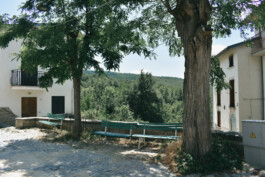
Cornillo Nuovo is enchanting. In the inevitable attempt to take over what is left behind by humans, nature dwells comfortably in its streets. Through the alleys, taken over by the natural landscape, a green carpet-like surface infiltrates the town and blurs the boundaries between what is urban and what is natural. Remnants of the past intertwine with grass and flowers, reminding us humans that Amatrice’s destruction has been, after all, the product of the careless and inevitable action of nature. The buildings stand still as empty ruins: monuments of the past awaiting demolition and a better, more sound, reconstruction, that will survive the next quakes.
Unlike in other villages, these buildings don’t demand attention or compassion, because the heart of this village, the square, is bizarrely still beating. Almost intact, accessible, and welcoming, as if it were awaiting for someone to inhabit it, the square offers a place to sit, something we have learnt cannot be taken for granted here. This brief opportunity takes away all the pain and concern for the future reconstruction. Cornillo offers a chance to rest and sit, but perhaps it is still in search of a reason to stay.


The caretaker Antonella
“We’d like to meet again in the central streets, where old people get some rest and the children play together.”

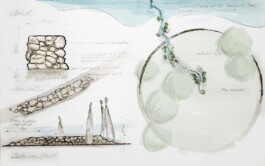
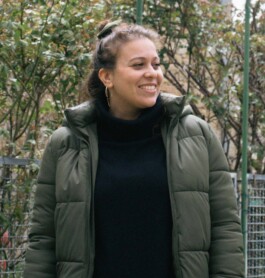
As part of the association “La Concordia”, but also as an architect, Antonella shares her dreams for Cornillo Nuovo. Pointing out at the stones left around the streets, she suggests that it would be delightful to engage with them in some ways, and experiment with different kinds of constructions. “Some people here have experience with stone work, like Peter, who lives at the end of the village.” Stones are part of Amatrice’s heritage, with sandstone “Pietra Serena” being the local and most used material. Because new constructions need to be seismically safe, salvaged stones are often dismissed due to their structural flaws.
She continues describing Cornilo Nuovo as a close-knit community, explaining that the public streets and squares still represent relevant spaces for them. Unlike in many other hamlets, here it is possible to sit and spend time in the central square. It is a rare possibility, since the streets of other hamlets are often fenced off and made inaccessible until completion of reconstruction works. “It would be really nice to revive our centre and add new meaning, a new purpose to it. People would definitely benefit from a pleasant place for gathering. It might contribute to the wellbeing of this community, and it might bring peace to animosities and fights.”


© 2026 Terremosse Easa Italia Aps. All rights reserved.
@sesam.terremosse
@easaitalia
Web
terremosse.eu
easaitalia.eu
The insitutions
In collaboration with
With the support of

© 2026 Terremosse Easa Italia Aps.
All rights reserved.
@sesam.terremosse
@easaitalia
Web
terremosse.eu
easaitalia.eu
Adress